|
|
|
Buffer Resources |
Examples |
|
Local Contacts |
|
|
Compare desirable and less desirable
approaches to streamside management.
Double-Click each to see a larger view. |
| |
|
 |
 |
|
A
mix of trees, shrubs and smaller
plants offers a rich diversity
of wildlife habitat, soil
stabilizing root growth, leaf
cover and more, all far more
protective of the streamside
than a planting of grass. |
|
|
|
|
 |
 |
Selective thinning along the
streamside allows homeowners to have
a view of the water while protecting the stream. Photos by
VADCR-DCBLA. |
|
|
|
|
 |
 |
|
While the shoreline on the left
does have trees, there are no
shrubs and smaller plants to
help slow and filter surface
runoff. The photo on the right
shows the drastic damage that
can result when upstream runoff
is uncontrolled and vegetation
to help stabilize the streambank
is absent.. Photo on left by VADCR-DCBLA.
Photo on right by BA STEP, VWRRC. |
|
|
|
|
 |
 |
|
Left...Livestock can cause
erosion and introduce bacteria
into streams. Local soil and
water conservation districts can
offer help to prevent this
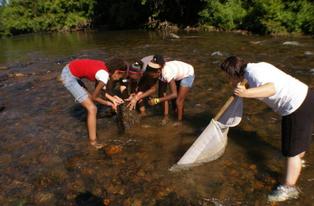
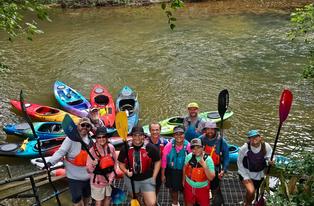
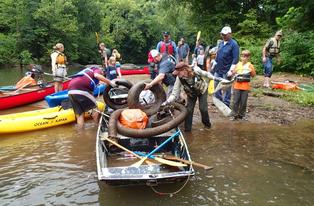
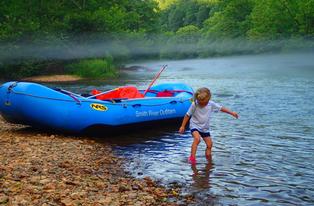
damage. Right...Clean waterways
are essential...and fun! |
|
| |
|
 |
 |
|
The
stream above (left) shows
erosion on the grassed side
while a diverse buffer on the
right side has a stabilizing
effect. The road in the photo at
right could be damaging to the
waterway if not for the small
but effective buffer along the
slope. |
|
| |
|
 |
 |
|
This
filtered view at left illustrates
good coverage on a
sloped riverside. Note the
damage shown in the photo at
right. |
|
|
Streamside Forest
Buffer
HOME |
|
Dan River
HOME |
| |