Citizen Monitoring
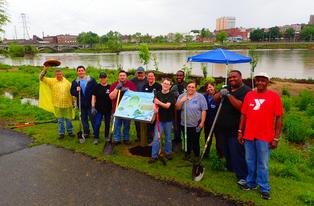
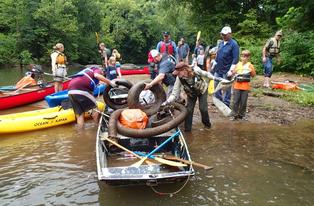
DRBA's mission is to protect our natural resources in our region. We do this through all of our programs and activities which include miles of river and land cleanups, water quality monitoring, environmental education, master planning and planting riparian buffers.
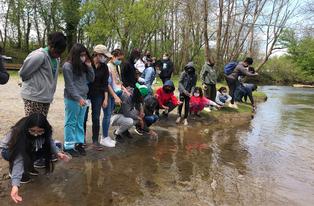
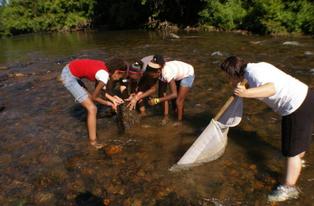
However, we can't do this alone! Water quality monitors are volunteers who test our local streams and rivers to ensure our water stays clean and healthy. We also work with local government departments, universities and researchers in both Virginia and North Carolina to ensure our local waterways stay healthy for you and future generations.
Monitoring our waterways is the best way to know what is happening in our watershed. Our rivers and streams are the source of our drinking water and critical to our local economy. Volunteer monitors play an integral role in assessing and protecting the health of our natural resources. Although state departments and watershed organizations, like DRBA, have hundreds of monitoring stations throughout the state, all of the waterways cannot be monitored through those efforts alone. And, with thousands of miles of waterways still needing assessment, volunteer participation is crucial.
There are several levels of commitment. You decide how much time and energy you want to give to help keep our waterways protected for future generations.
REPORT A THREAT TO OUR WATERWAY - RIVER WATCH MONITOR FORM
Watch our webinar highlighting the Types of Water Quality Monitors with DRBA!
Types of Water Quality Monitors
DRBA River Watch Monitor - MORE DETAILS
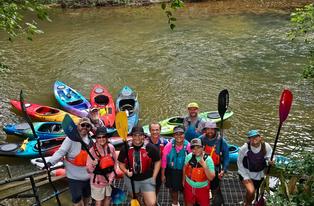
River Watch Monitors conduct a visual stream assessment or “stream walk” to evaluate a waterway’s health by assessing the physical habitat and potential impacts. A stream walk may be done on foot or by using a boat or canoe. Conducting a stream walk can produce valuable information about our local waterways. River Watch volunteers may notice litter, farm animals, or a broken pipe leaking harmful liquids in or near a stream or river which can cause damage to our drinking water.
Time Commitment: Volunteers are expected to complete their visual assessments on a regular basis, preferably monthly, but may submit a threat at any time!
DRBA CWQM E.coli Monitor - MORE DETAILS
Level I testing for educational and recreational purposes – not reported to VA DEQ annually.
Training is required. E.Coli Monitors learn how to sample a waterway to detect the level of bacteria in a river or stream. E.Coli Monitors generously give approximately 1 hour a month of their time to sample and commit to sampling for one year.
Time Commitment: 1 year minimum, 2-hour in-person training required.
Monitor assigned waterway once a month (30 minutes at site, 30-45 minutes plating and counting colonies).
DRBA proudly partners with the Izaak Walton League of America on the following monitoring programs:
Salt Watch Monitor - Learn more through IWLA
A Salt Watch Monitor raises awareness about the connection between salt and stream/public health
by identifying chloride hot spots in freshwater. Salt Watch Monitors may help advocate for smarter application of road salt by sharing results with private landowners and local and state agencies.
Time Commitment: 10-15 minutes monthly from December - March, may be added to CWQM E.coli monitoring. Upload data into the Clean Water Hub after testing.
Remember to associate your site(s) with the Dan River Basin Association in the Clean Water Hub.
Nitrate Watcher - Learn more through IWLA
Nitrate Watchers are volunteers that monitor for the presence of nitrate in waterways using nitrate test strips. Nitrogen is an essential nutrient for plant growth, but human activities produce more nitrogen than natural systems can use. As this nitrogen moves through the environment, it becomes nitrate. The nitrate can then make its way to streams and sources of drinking water via surface runoff or groundwater saturation. Excess nitrate in water can pose serious problems for the health of humans and the environment. Thanks to the Community Foundation Serving Western Virginia for generously sponsoring the first 75 Nitrate Watchers with DRBA in 2026.
Time Commitment: 10-15 minutes monthly, may be added to CWQM E.coli monitoring. Upload data into the Clean Water Hub after testing.
Remember to associate your site(s) with the Dan River Basin Association in the Clean Water Hub.
Virginia Save Our Streams Monitor - MORE DETAILS
Reported to VA DEQ annually by Izaak Walton League of America.
Online training and quiz, in-person field training, and a certification test are required. Based on Virginia Save Our Streams guidelines, these monitors learn how to sample a waterway for macroinvertebrates to detect the health of a river or stream. VA SOS Monitors generously give approximately 4 hours, twice a year (spring & fall) and commit to sampling for one year.
Time Commitment: Online certification (3 webinars & quiz)
Field training on site & test (3 -4 hours)
Monitor in the spring and fall (takes about 3-4 hours each time) - no longer four times a year!
Upload data into the Clean Water Hub after testing.
Remember to associate your site(s) with the Dan River Basin Association in the Clean Water Hub.
Riparian Buffer Assessment
Streamside trees and vegetated areas (riparian buffer) adjacent to a creek or river provide multiple benefits to water quality and habitat. DRBA is collecting data on the quality and quantity of riparian buffers along major waterways in our watershed. There are hundreds of miles of river banks and we can’t do this assessment without volunteers. The riparian buffer mapping project can provide state and local governments with information to make good decisions on protecting our rivers and streams. Learn more about how to assess riparian buffer and get involved in this project.
Water flow is also important: Read DRBA's Executive Summary Report on the Smith River, VA